Dermapen Microneedling
Microneedling for uneven skin tone, visible pores and skin texture.
For the face and body
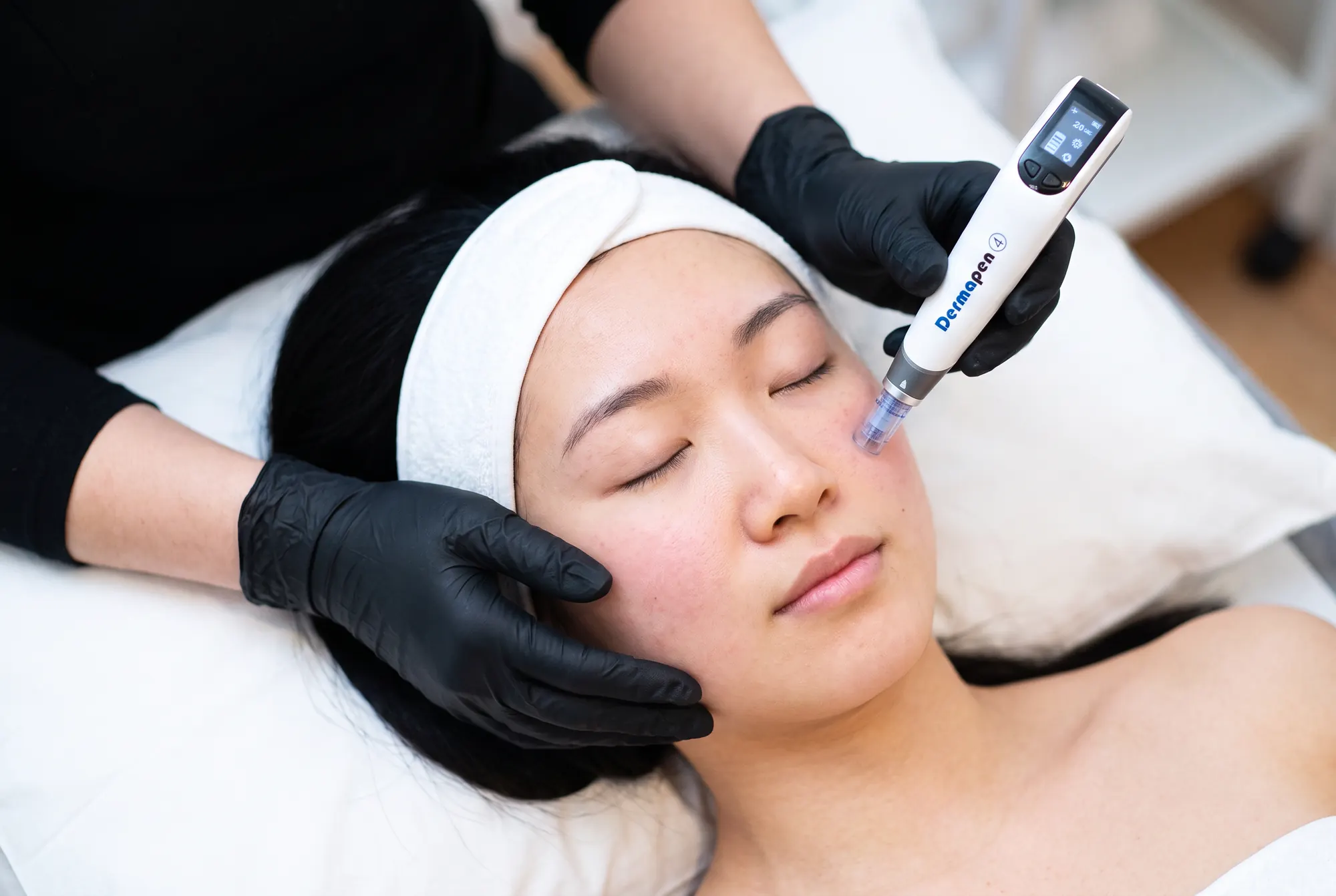
What is Dermapen Microneedling?
Dermapen microneedling may help improve the appearance of uneven pigmentation, enlarged pores, acne scars and fine lines.
It may also form part of a treatment plan for selected cases of melasma, following an assessment of the pigmentation and the skin's suitability.
How is it performed?
- We assess your skin and the concern you want to improve, and decide whether a product suitable for microneedling will be used with the treatment.
- We move the Dermapen across the skin in small sections, adjusting the needle depth for each area.
- We finish with a soothing product and explain your aftercare.
How does Dermapen work within the skin?
Dermapen uses fine needles that move vertically to create controlled microscopic punctures. The needle depth is adjusted according to the treatment area, skin condition and treatment objective.
These tiny injuries activate the skin's natural repair response, releasing signals that stimulate fibroblasts, the cells responsible for producing collagen and other supporting components of the skin. As repair and collagen remodelling progress over the following weeks, skin texture may become smoother, and the appearance of scars and fine lines may improve.
Traditional Dermapen microneedling works through mechanical stimulation, without radiofrequency energy or deliberate heating of the tissue.
What role do accompanying products play?
The microscopic channels temporarily increase the skin's permeability, which can enhance the penetration of certain topical ingredients. However, not every serum or medicine is suitable for use during microneedling.
Any accompanying product must be assessed for its formulation, sterility and suitability for this specific use, alongside the device and product instructions. Some active ingredients are better used as part of a skincare routine between sessions, rather than during or immediately after treatment.
Pigmentation, melasma and melanin
Melanin is the natural pigment that gives skin its colour. It is produced by specialised cells called melanocytes and transferred to surrounding skin cells. Excess production or uneven distribution can result in dark patches and an uneven complexion.
Melasma is more complex than surface discolouration. Sunlight, visible light, hormonal influences and genetic predisposition can all contribute. Treatment therefore aims to reduce excess pigmentation while managing the factors that trigger it.
Different topical ingredients act at different stages of this process. Some inhibit tyrosinase, an enzyme involved in melanin production. Others, such as niacinamide, help reduce the transfer of the structures that carry pigment from melanocytes to surrounding skin cells. The choice of ingredient and the timing of its use depend on the skin assessment. These mechanisms do not mean that such products are suitable for delivery through microneedling.
Dermapen does not directly switch off melanin production or remove the cells that produce pigment. It may support improvement in selected cases when used within a carefully planned treatment programme. Melasma can recur, and irritation can worsen pigmentation, so treatment selection and ongoing sun protection are essential. A suitable tinted sunscreen containing iron oxides can also help protect against visible light.
Enlarged pores and oily skin
By stimulating collagen and improving skin texture, microneedling may help make enlarged pores less noticeable. Pores are normal skin structures and cannot be permanently closed.
For oily skin, a separate, tailored skincare plan can address excess shine and congestion. Dermapen alone is not an established treatment for reducing oil production. Where there are inflamed spots, or spots filled with pus, treatment is postponed in the affected area until the inflammation has settled. Acne scars can then be assessed for microneedling.
Who may benefit?
Dermapen may help improve:
- Uneven skin tone and the appearance of some dark spots.
- Pigmentation left after acne, once inflammation has resolved.
- Selected cases of melasma, as part of a comprehensive treatment plan.
- The appearance of acne scars and other suitable scars.
- Enlarged pores and uneven skin texture.
- Fine lines and wrinkles.
- Reduced skin firmness and elasticity.
- The appearance of stretch marks in suitable areas of the body.
Who it may not suit
It is not suitable over active breakouts or skin infection, and may not suit some skin or medical conditions.
We confirm suitability at your consultation.
Results
Results depend on the concern being treated, the skin's response and the supporting skincare plan.
Microneedling is designed to work with the skin's own repair process, so any change tends to build gradually over the following weeks.
Results vary from person to person and are not guaranteed. We explain what may be realistic for your skin at your consultation.
Aftercare
- Avoid makeup for the time we advise and keep the skin clean.
- Avoid heat, swimming and hard exercise for a short time.
- Use a sunscreen with a high SPF every day.
- Follow the aftercare advice we give you, and contact us if anything worries you.
Common questions
Still have a question? Email us.
Do I need a consultation first?
Yes. We assess your skin, medical history and goals before any treatment, and explain your options and costs. You decide afterwards whether to go ahead.
How is this different from Potenza?
Dermapen uses microneedling alone. Potenza adds radiofrequency energy. We help you choose at your consultation.
How many sessions will I need?
It depends on your skin and your goals. We agree a plan with you at your consultation.
How much does it cost?
A single session is £350 for the face or one body area. That is the price for one session, not a package, and includes VAT. Your consultation is free: we confirm your price there, and explain any package price if a course of sessions may suit you.