LED Light Therapy
Specific wavelengths of light to support the skin, without needles or exfoliation.
For the face
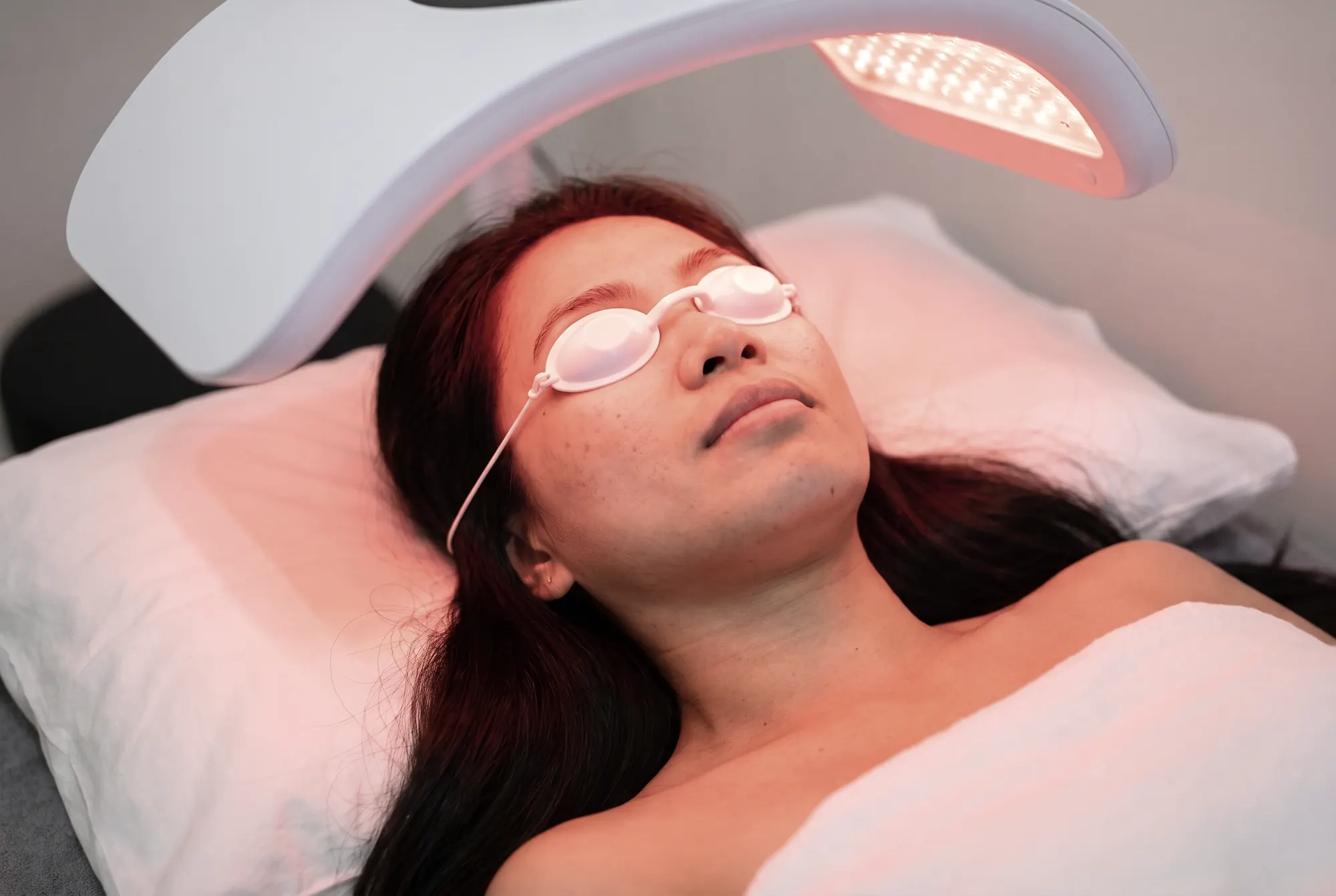
What is LED Light Therapy?
LED light therapy uses specific wavelengths of light to stimulate biological responses within the skin, without needles or exfoliation. Its effects depend on the wavelength, measured in nanometres (nm), the dose delivered and the condition of the skin.
Red, blue and yellow light are the wavelengths most commonly used and studied. Exact specifications may vary depending on the device. Sessions are often added to other treatments or used as a course.
How is it performed?
- We choose the light for your concern (red, blue or yellow) and give you protective eyewear.
- You rest while we position the LED panel over your face for the session.
- We remove the panel and explain any aftercare.
Red light, about 630 to 660 nm
Red light reaches relatively deeper into the skin than blue light and can reach the dermis, where the cells that produce collagen, called fibroblasts, are located.
Molecules within cells that are sensitive to light absorb its energy. This may influence the activity of mitochondria, the structures responsible for producing cellular energy, and change signals involved in repair and renewal.
This response may help support fibroblast activity, collagen production and the remodelling of supporting tissue. With repeated sessions at appropriate doses, skin may become smoother and firmer, with less noticeable fine lines. This happens without creating thermal coagulation within the skin.
Blue light, about 405 to 420 nm, commonly 415 nm
Blue light reaches less deeply than red light. Its main effect on acne involves naturally occurring substances called porphyrins, produced by Cutibacterium acnes bacteria within the hair follicles and their sebaceous glands.
When these substances absorb blue light, reactive oxygen species are produced. These damage the bacteria, which may help reduce their numbers and improve some inflammatory breakouts.
This does not sterilise the skin completely. Blue light is not enough on its own for deep or cystic acne, and it does not remove blackheads, whiteheads or acne scars by itself.
Yellow light, about 570 to 590 nm
Most of the studies use 590 nm. Molecules within the skin that are sensitive to light absorb its energy, which may change the signals that regulate how cells respond to inflammation.
Who may benefit?
Red light
Red light may help with:
- Supporting collagen production and skin firmness.
- Gradually reducing the appearance of fine lines.
- Improving skin texture and smoothness.
- Supporting repair processes and calming certain inflammatory responses.
Blue light
Blue light may help with:
- Reducing bacteria associated with acne.
- Some mild to moderate inflammatory acne.
- Managing breakouts in skin prone to acne.
Yellow light
Yellow light may help with:
- Reducing the appearance of certain types of redness.
- Soothing some symptoms of sensitive skin.
- Skin comfort during recovery.
- Some measures of skin barrier function.
Who it may not suit
It may not be suitable if you are sensitive to light, take medicines that increase light sensitivity, or have epilepsy triggered by light.
We confirm suitability at your consultation.
Results
LED is often used as a course of regular sessions, on its own or alongside other treatments.
Results vary from person to person and are not guaranteed. We explain what may be realistic for your skin at your consultation.
Aftercare
- Carry on with your usual skincare unless we advise otherwise.
- Wear a sunscreen with a high SPF every day.
- Follow the aftercare advice we give you, and contact us if anything worries you.
Common questions
Still have a question? Email us.
Do I need a consultation first?
Yes. We assess your skin, medical history and goals before any treatment, and explain your options and costs. You decide afterwards whether to go ahead.
Does LED light therapy hurt?
It does not break the skin and sessions are usually comfortable.
How many sessions will I need?
It depends on your skin and your goals. We agree a plan with you at your consultation.
How much does it cost?
A single session is £110. That is the price for one session, not a package, and includes VAT. Your consultation is free: we confirm your price there, and explain any package price if a course of sessions may suit you.